Building a wastewater treatment plant upstream of a town is a bad idea: the discharge will flow right back to where people live. Put the plant downstream, and the problem disappears. Strategic planning expert Taras Rashkevych uses this simple example to explain the essence of strategic environmental assessment (SEA). Every Ukrainian hromada is required to carry out this procedure at the strategic planning stage — to anticipate environmental problems before they arise, prevent harm to the environment, and lay a solid foundation for recovery and development.
Why SEA Matters
Strategic environmental assessment is as integral to strategic planning as resident surveys or public consultations. Failing to follow the procedure can put a hromada’s development strategy at risk and jeopardize the projects it envisions. That, in turn, can prove costly: delayed or lost funding, stalled investment, and the need to revisit decisions that have already been adopted.
SEA should be seen not as a formality or an extra burden, but as an important tool for sound strategic planning. It allows hromadas to take risks into account and work systematically to protect people’s health and safety, keep decisions balanced, and attract investment.

LDN Project Manager Svitlana Seldina
“When a hromada plans its development, it is important to consider not only what needs to be built or restored, but also how each decision will affect water and air quality, the state of the environment, and people’s living conditions. On the other hand, when resources are limited, there is no room for mistakes: an economically attractive solution may create additional environmental risks or significant costs down the line,”
says Legal Development Network (LDN) Project Manager Svitlana Seldina.
Say, for example, a hromada makes building shelters in schools its priority. From a safety standpoint, this is undoubtedly a necessary decision. But when planning specific facilities, environmental factors must also be taken into account: soil conditions, possible flooding, land contamination, and the handling of construction waste. Another example is restoring a damaged water supply system. Here, it is not enough simply to rebuild the infrastructure; the state of water resources, potential pollution risks, and the long-term consequences of the chosen solutions must also be assessed. The value of SEA lies precisely in revealing conflicts between different priorities and weighing alternatives before the strategy is approved.
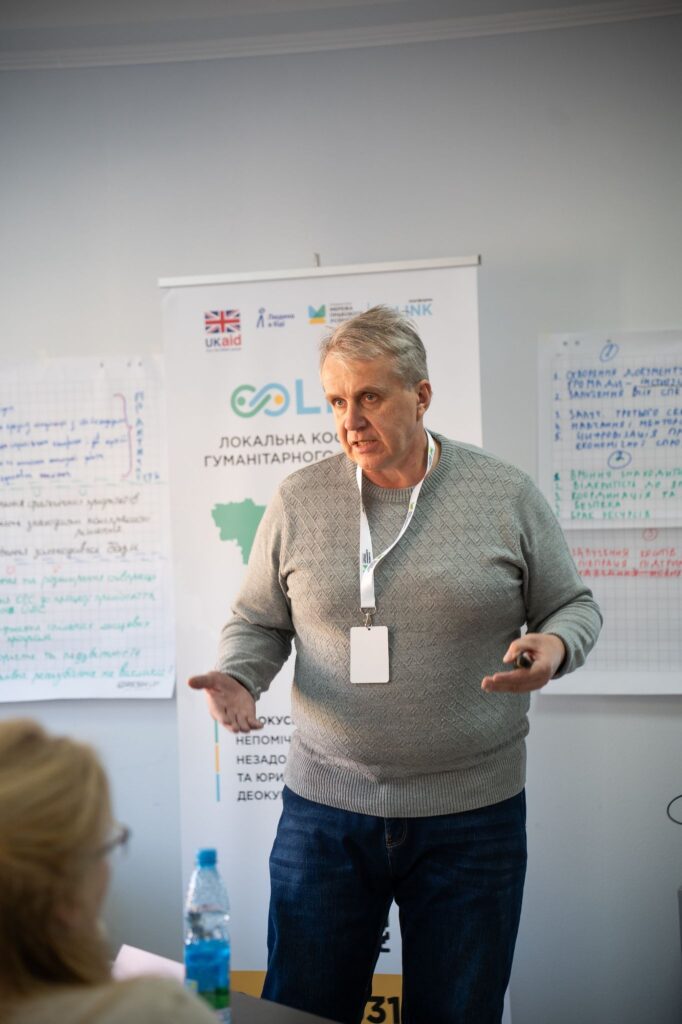
LDN strategic planning expert Taras Rashkevych during work on the development strategy of Velyka Oleksandrivka hromada, Kherson Oblast
“By conducting an SEA, a hromada can identify potential environmental risks and anticipate the possible negative effects of individual measures on the environment and public health. This makes it possible to introduce the necessary changes while the strategy and action plan are still being drafted: to adjust planned decisions, reconsider the location of certain municipal or social infrastructure facilities, or propose alternatives. That is exactly what SEA is for — preventing potential harm that would later take far more effort and money to undo. In the end, the hromada loses nothing; instead, it gains a better, safer, and more balanced strategic planning document,”
explains Taras Rashkevych.
The Role of SEA in Wartime
The full-scale war has radically changed the conditions under which Ukrainian hromadas plan their future. The situation is especially difficult in frontline hromadas, where daily security threats, destroyed infrastructure, contaminated land, and limited resources force local authorities to tackle urgent problems and set long-term development priorities at the same time.
In these circumstances, strategic environmental assessment is of real practical value. It helps hromadas not only assess the potential impact of planned decisions on the environment and human health, but also take into account existing environmental problems, trends in the state of the environment, risks, and alternative development scenarios. This is particularly important when planning the recovery of areas affected by hostilities.
“We fully understand how hard it is for de-occupied hromadas to think about long-term development today, when people’s safety remains the top priority. But that is exactly why recovery decisions must be as well-grounded as possible. SEA is not just a procedure or an add-on document to the strategy. It is a tool that allows us to look at a hromada’s development as a whole: to take environmental trends into account, assess possible risks, compare alternatives, and choose solutions that will not create new problems in the future. The point is to rebuild hromadas not only quickly, but also in a way that is safer for people, environmentally sound, responsible, and mindful of the long-term perspective,”
says Svitlana Seldina.
The expert illustrates this position with examples from the Legal Development Network’s work with de-occupied hromadas in the South. In 2025, LDN helped three hromadas in Mykolaiv Oblast develop recovery and development strategies, and in 2026 it did the same for two hromadas in Kherson Oblast.
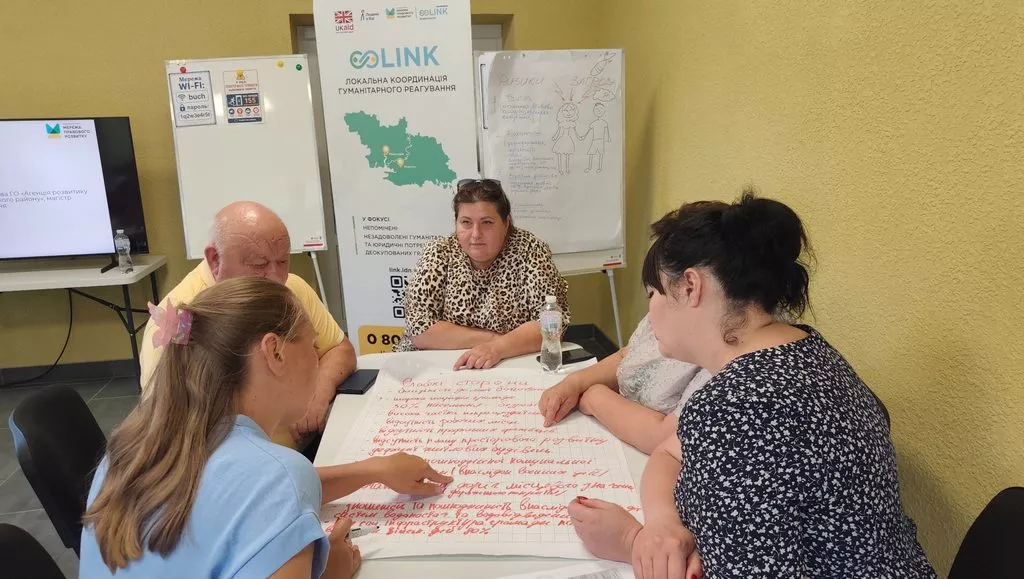
Members of the working group developing the strategy of Velyka Oleksandrivka hromada, Kherson Oblast
“Today we often work in areas where there is no complete information about the state of the environment. Some land may be mined or contaminated, damaged industrial facilities pose additional risks, and the security situation makes full-scale studies impossible. At the same time, hromadas need to make decisions right now: restore water supply, plan housing for people who have lost their homes, and set priorities for rebuilding infrastructure. That is why assessing alternatives, accounting for existing risks, and ongoing monitoring become especially important,”
says Svitlana Seldina.
A lack of data does not make SEA any less important; rather, it calls for particular attention to the quality of the source information and the soundness of the conclusions.
Even with incomplete data, SEA makes it possible to organize what is known about the state of the environment, identify the potential environmental consequences of planned measures, assess alternatives, and propose ways to prevent or mitigate negative impacts. Another key element is defining monitoring indicators that will help track the actual effects of implementing the document and respond promptly to any environmental problems that emerge.
Debunking Myths About SEA
One common myth is that an SEA necessarily requires substantial funding and highly specialized external experts. In reality, a hromada is fully capable of handling the task on its own by bringing in local specialists from various fields.
For example, health workers, teachers, and other professionals can contribute to preparing the environmental report, helping to analyze the situation and draw the necessary conclusions. This approach makes it possible to draw on the expertise already available within the hromada and save local budget funds.
The key role in the environmental assessment process is played not by external experts, but by the local self-government body. After all, it is the local self-government body that organizes the SEA, provides funding, ensures the necessary consultations and public discussion, and is responsible for compliance with the established procedure.
Full-fledged participants in the SEA procedure include representatives of the authorized bodies for environmental protection and health care, as well as the public: hromada residents and representatives of non-governmental organizations. The former review the materials and provide comments and proposals within their remit, while the latter ensure public participation and oversight so that the SEA takes into account the interests of different groups of the population.
Tips From LDN Experts
Taras Rashkevych and Svitlana Seldina emphasize that the SEA procedure is well within the reach of every hromada. To see this for yourself, you simply need to get started. That is the first tip.
The second is to comply with current legislation at every required stage of the SEA. The law’s main requirement is that hromadas preparing strategic documents must carry out an SEA.
In practice, there have been no cases of hromada strategies being annulled because an SEA was not conducted. Still, according to Taras Rashkevych, the procedure should not be ignored. In theory, during an election, for instance, an opponent could claim that the procedure was violated and that no SEA was carried out.
“Hromadas recovering in wartime must take into account not only the environmental but also the legal aspects of strategic planning. Properly conducting an SEA in the cases required by law helps ensure that decisions are well-grounded and legally robust. Failure to follow the established procedure may put the further implementation of planning documents and the measures they envisage at risk,”
points out Svitlana Seldina.
As for when to start the SEA, the answer is simple: ideally, in parallel with developing the strategy, once its main goals and development directions are being defined.
“SEA should accompany the strategy development process, rather than being carried out after the work is finished. This makes it possible to take environmental factors into account while strategic decisions are still being shaped and, if necessary, to adjust them before the document is approved,”
stresses Taras Rashkevych.
Special attention should be paid to the relationship between the hromada development strategy and its implementation action plan. Although the two documents are interconnected, they differ in level of detail. The strategy sets out development goals and directions, while the action plan specifies the mechanisms for achieving them through specific tasks, projects, and measures. It is at the action plan level that decisions may emerge whose potential environmental impact could not be assessed in sufficient detail when the strategy was being prepared. Therefore, SEA planning should take into account the content of each document, the nature of the planned activities, and the requirements of the law.
Since the law does not require setting up a dedicated working group for the SEA, there is no need to overcomplicate things. A hromada can involve its existing strategic planning group in the procedure, adding specialists in environmental and health issues.
Finally, the experts advise clearly assigning responsibility for organizing the SEA procedure and ensuring that the materials are prepared to a proper professional standard.
For hromadas that are highly motivated to develop and achieve their strategic goals, and are ready to learn and gain new experience, the SEA procedure will not be a burden. On the contrary, such hromadas will be better able to understand their gaps, strengths, and opportunities, and to put the information gathered during the SEA to good use.
Read also:
● Security, Infrastructure, and Opportunities: What Kalynivka Hromada’s Strategy Takes Into Account
● Building a Future for People: Priorities of the Velyka Oleksandrivka Community through 2034
This material was prepared by the Legal Development Network in cooperation with the Czech humanitarian organization People in Need, with financial support from the UK Government, as part of the HAVEN project — Humanitarian Action through Volunteers, Enablers, and Networks.
The views expressed by the experts are their own and do not reflect the views of the organizations or the donor.

