Author: Yuliia Bilyk, Communications Manager at the Legal Development Network
“We left before, so we have already been through this, and we understand that nobody is waiting for us anywhere else. Our home is only here.” This is how residents of the Velyka Oleksandrivka and Kalynivka communities in Kherson Oblast responded to interviewers. They were surveyed to find out what the communities’ development strategies should look like through 2034. The survey was conducted by the Legal Development Network in cooperation with the Czech Humanitarian Organisation People In Need, with financial support from the UK Government.
Most respondents are ready to stay and rebuild their villages, but they expect concrete action from the authorities: security, schools and kindergartens, jobs, and a genuine opportunity to influence decisions. Below, we explain what the survey revealed and how the needs of the two communities differ.
About the study
The project specialists were able to travel only to the Velyka Oleksandrivka community, where they worked alongside local interviewers. The roads leading to villages in the Kalynivka community are dangerous because of ongoing drone attacks. Therefore, five female interviewers from the local area recorded the responses of residents in the other villages, while the project team coordinated their work remotely.
Security challenges affected both the number of responses and the way the information was collected. In the Velyka Oleksandrivka community, interviewers surveyed 307 respondents (150 in person and 157 online) across 18 of its 34 settlements. An additional 10 local business representatives completed questionnaires. In the Kalynivka community, 167 respondents were surveyed (150 in person and 17 online) across 7 of its 12 settlements.
Both communities are close to the frontline, but they differ considerably. Velyka Oleksandrivka is the largest community in Beryslav District. It serves as a kind of “hub” for addressing humanitarian, economic and security issues. A civil society organisation is active there, attracting donor funding for local initiatives. Kalynivka, by contrast, is a relatively small community bordering communities in Mykolaiv Oblast. A large number of its villages have been destroyed.
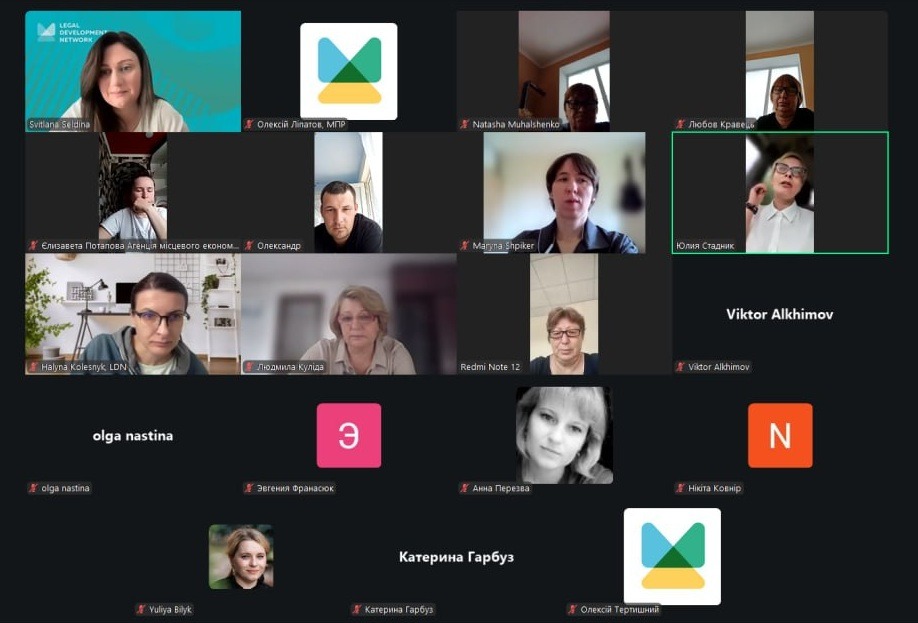
Marina Shpiker, the sociologist involved as an expert, notes that respondents may have perceived outsiders and unfamiliar people differently from local interviewers, which may have influenced their answers.
“This may have created the ‘fellow passenger on a train effect’: it can be easier to share sincere feelings with a stranger whom you are unlikely to meet again,”
Marina Shpiker observes.
Attachment to the community and migration intentions
Overall, residents of both communities in Beryslav District are willing to stay at home and take part in recovery. At the same time, they have set out the conditions: security, restored schools, jobs, basic services and transparent dialogue with the authorities.
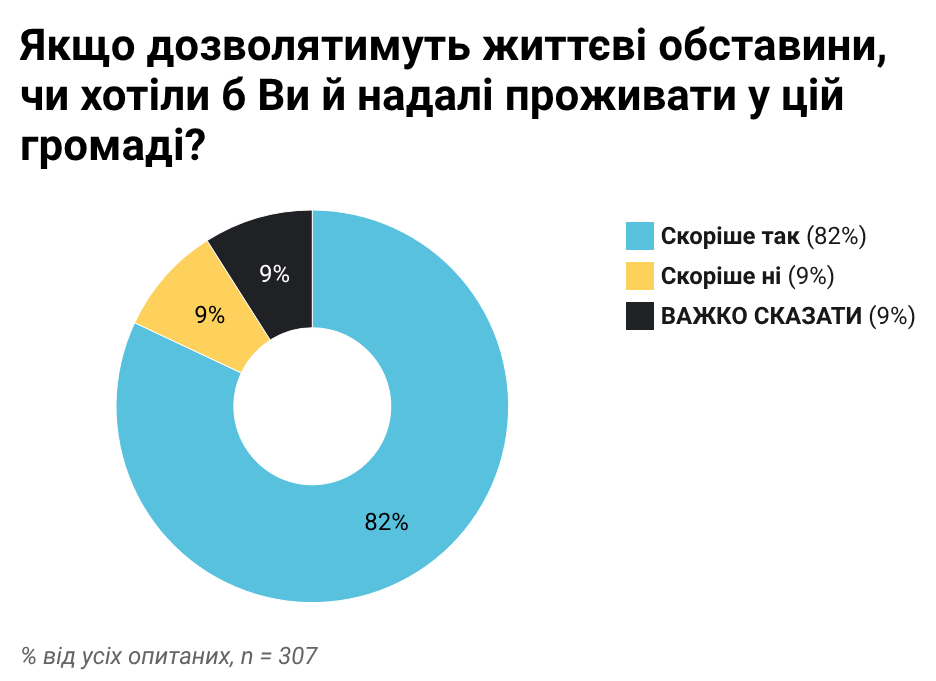
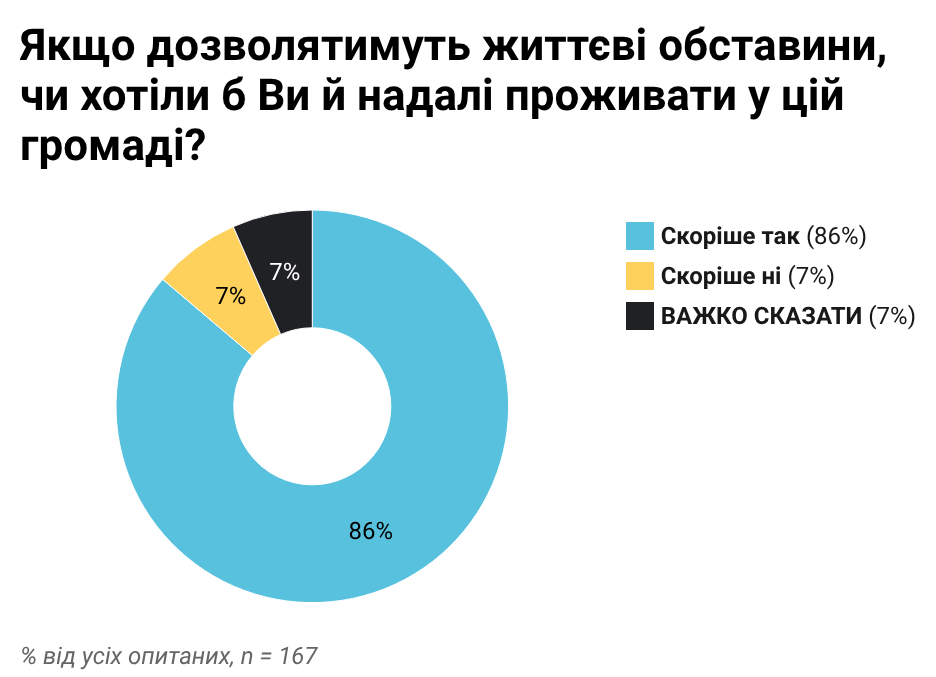
A desire to continue living in their community was expressed by 82% of respondents in Velyka Oleksandrivka and 86% in Kalynivka. Attachment was strongest among residents of villages and smaller settlements in the Velyka Oleksandrivka community (91%) and among people aged 46–59 in Kalynivka (96%). It was lowest among internally displaced persons (IDPs): 52% and 53%, respectively.
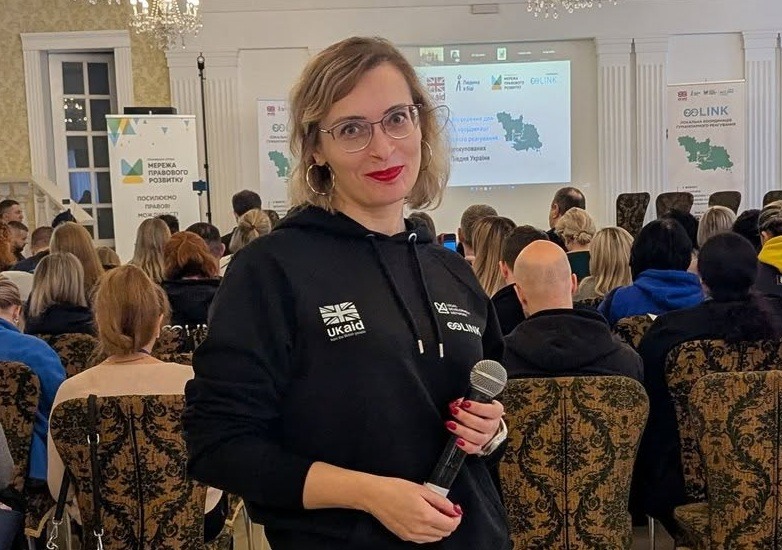
“Most people made it clear in their answers that they would stay in their communities. Many even said: ‘We left before, so we have already been through this, and we understand that nobody is waiting for us anywhere else. Our home is only here, so we will hold on until the very end.’ Most forcibly displaced people also said they did not plan to move any farther,”
shares Yuliia Stadnyk, an expert involved in the study and coordinator of the interviewer team.
For Kalynivka, young people are a particular concern: among respondents aged 18–45, 67% felt attached to the community, while 11% planned to leave. This is the highest share among all age groups. A considerable number of respondents in this community have not yet made up their minds: they will stay if conditions are created for children and young people and jobs become available.
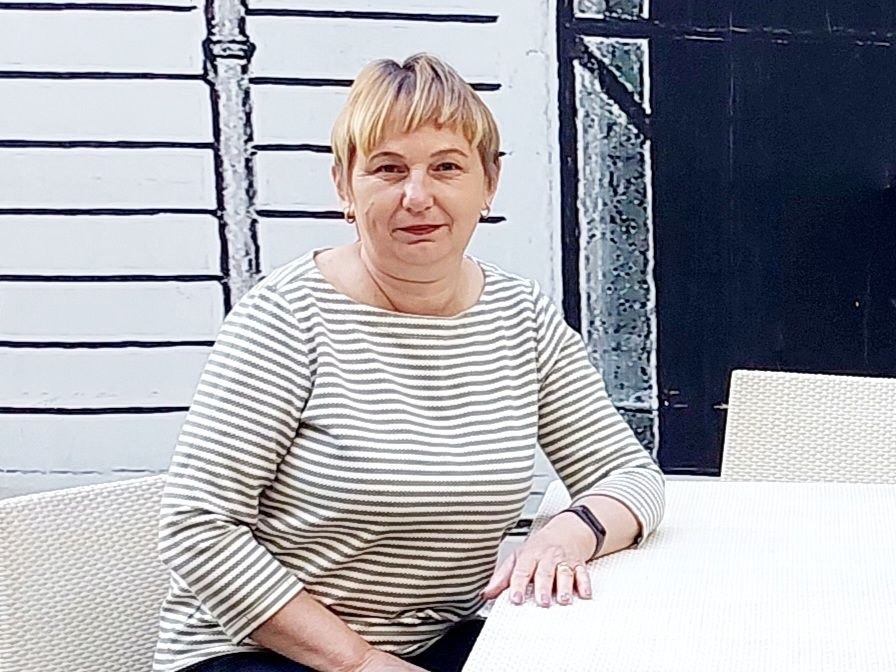
Liubov Kravets, head of the Bobrovyi Kut starosta district in the Kalynivka community, which includes the villages of Bobrovyi Kut and Zapovit, confirms this:
“Older people want the war to end and the boys to come home. Young people are more concerned about their children: they want schools and kindergartens in the villages. Everyone understands that the situation is unstable and nobody knows what will happen next. But despite that, people want to stay in their homes. We are one big family here, and we want that family to stay together.”
Priorities and the state of essential services
In the Velyka Oleksandrivka community, roads and transport are by far the top priority, cited by 69% of respondents. Forty-one per cent rated road conditions negatively, while 46% were dissatisfied with waste collection. There is a clear disparity between the administrative centre and the villages: 7% of residents in the centre were dissatisfied with waste collection, compared with 86% in other settlements; dissatisfaction with transport links stood at 30% and 65%, respectively.
In Kalynivka, residents identified education and preschool provision as their top priorities (56%), followed by roads and transport (46%). As many as 92% of respondents were dissatisfied with household waste collection, 72% with gas supply, 64% with preschool education (rising to 89% in villages), and 44% with employment opportunities (82% in villages). Forty-five per cent of residents in Kalynivka and 79% of village residents were dissatisfied with civil protection.
Liubov Kravets gives a concrete example: around 80 children live in her starosta district, but there is no playground.
“After school, children effectively have nowhere to spend their time. They are left to their own devices and wander the streets; they may get up to mischief simply because there is no properly equipped place for them to relax.”
In the Kalynivka community, 95% of respondents supported the idea of setting up a children’s and sports playground, and 36% were ready to contribute to its implementation personally. The local school has been rebuilt and a shelter has been equipped; residents are now waiting for it to reopen. As Liubov Kravets points out, online learning is no substitute for a full education.
Security and the needs of specific groups
In the Velyka Oleksandrivka community, 43% of respondents said they felt safe, while 34% felt unsafe. There were significant differences between groups: 38% of women felt safe, compared with 54% of men; and 27% of village residents felt safe, compared with 63% of residents in the central settlements of Velyka Oleksandrivka and Kalynivske.
In Kalynivka, 46% felt safe, 22% did not, and 32% were unable to assess their own level of safety. In both communities, the main threats identified were drone attacks and missile strikes. In Velyka Oleksandrivka, 83% and 54% named these threats, respectively; in Kalynivka, the figures were 81% and 83%.
Different groups of residents have different needs. Internally displaced persons prioritised housing (92% in Kalynivka and 70% in Velyka Oleksandrivka), while veterans and their families prioritised medical treatment and rehabilitation (85% and 75%, respectively).
Participation and trust in local authorities
Valeriia Melikhova, a project specialist and interviewer who collected data in the villages of the Velyka Oleksandrivka community, believes respondents answered sincerely. The problems they described are genuine and deeply troubling to them. However, residents were not particularly eager to take part in the survey. According to Melikhova, older and middle-aged people were the most willing to engage, while young people tended to avoid participating.
“This seems to reflect how residents of these settlements are involved in decision-making in their communities. When we asked whether they were involved in decisions, most said no. Although people receive information through various channels, including Telegram and Facebook groups, they would like to be more involved,”
Valeriia Melikhova notes.
In both communities, 41% of residents felt they had at least some influence on council decisions. At the same time, 33% of residents in Velyka Oleksandrivka and 31% in Kalynivka were certain they had no such influence.
When asked how they would like to receive information about community life, reconstruction and the allocation of budget funds, respondents mentioned regular meetings. Their desire to have a genuine say in decision-making is also reflected in a degree of disappointment and a lack of faith in positive change.
“When we asked people to take part in the survey, they often said: ‘We’ll do it. But what will come of it? You’ll write everything down now, but will anything actually come of it? There have already been so many people like you coming here,’”
Valeriia Melikhova recalls.
Marina Shpiker sums up the tone of the responses: it is not “everything is bad,” but rather “I want to stay here, so I want things to be as good as possible here for me and my children.”
Implications for developing community strategies
Yuliia Stadnyk says that conducting the survey was a deeply moving experience for her and the team, because of the way people regard their communities as home.
“Of course, we also heard a lot of criticism, but the prevailing view among people is that something also depends on them. They even said, ‘This is how I would do it.’ Not everyone, of course, but a considerable proportion of residents are ready to take action to make life better, and some have ideas about what needs to be done and how,”
Yuliia Stadnyk emphasises.
People’s calls for openness, consistency, territorial equality, efforts to meet the needs of different groups, and attention to security considerations are factors that communities must take into account in their strategies.
For example, high levels of dissatisfaction with household waste collection, especially in remote settlements, indicate that this issue needs specific attention when setting communities’ strategic priorities. Education requires a comprehensive approach: in-person learning cannot resume without shelters, and young families cannot be retained without schools and kindergartens.
When setting strategic priorities, it is important to account for differences in needs and access to services between administrative centres and remote settlements. According to respondents, both communities currently provide relatively better services in their centres than in outlying villages.
Programmes should address the specific needs of different population groups, including IDPs, veterans, older people and young people. The strategy should follow a security-oriented sequence: response, resilience, recovery and development.
Finally, in response to residents’ requests, regular reporting, the presence of local authorities in villages, and genuine mechanisms for public participation should become integral to implementing the strategies.
This article was prepared by the Legal Development Network in cooperation with the Czech humanitarian organisation People in Need and with financial support from the UK Government as part of the HAVEN project — Humanitarian Action through Volunteers, Enablers, and Networks.
The views expressed by respondents are their own and do not represent the views of the organisations or the donor. The interpretation of the data is the responsibility of the authors of this article and does not necessarily reflect the views of the partners or the donor.
P. S. In June 2024, the Legal Development Network (LDN) launched a crowdfunding campaign, Recovery of The South of Ukraine , as part of the crisis response program #StandWithUkraine.

