Over three years, 14 de-occupied communities in Kherson Oblast have reported 6,745 needs of their residents to the LINK mechanism. More than half of them have already been fulfilled. We looked at how these needs have changed, what happened in Q3 2026, and who delivers the aid.
Since September 2023, the Legal Development Network has been implementing LINK, a mechanism for local coordination of humanitarian response, in partnership with the Czech humanitarian organisation People in Need and with funding from the UK Government.
Mariine: two years in the life of one village
Since August 2024, representatives of Mariine village in Vysokopillia community have reported 36 residents’ needs to LINK. Of these, 19 have been fulfilled, nine are no longer relevant and eight remain open.
The first requests came in on 20 August 2024. The village lacked drinking water (20 litres per person), hygiene kits, children’s hygiene products and 72 tonnes of fuel briquettes, 3 tonnes per household.
Corridor UA CF delivered the water a month and a half later, and Southern Development Strategy NGO provided the children’s hygiene products. No partner came forward for the briquettes or the hygiene kits. A repeat request for 60 tonnes of briquettes in July 2025 also went unanswered. In December 2025, the community changed its approach and asked not for briquettes but for cash assistance to buy them. Within nine days, People in Need paid it out to 15 recipients.
In total, ten organisations have met Mariine’s needs. Tenth of April NGO brought crutches 20 days after the request. Caritas-Beryslav CF gave hygiene kits to displaced families on the same day the request came in, and food kits two days later. Southern Development Strategy NGO twice gave families with children vouchers for hygiene products. And in July 2026, SOS Children’s Villages fulfilled three requests for families in difficult life circumstances that had been waiting for almost two years.
In 2024, the community reported a need for trucked drinking water. In 2026, it is planning its own water supply: on 2 May, it submitted requests for a borehole, a submersible pump, a solar panel for the borehole, a water tower and a water treatment system. None of these five requests has found an implementing partner yet. At the end of July, as the security situation deteriorated, the community reported a need for 23 hygiene kits and 23 food kits, one per household. All eight open needs are high priority; on 23 September, the community confirmed that they are still relevant.
What is happening with Mariine’s requests can be seen across the whole oblast. Partners usually fulfil small requests for specific families within a few days. But requests for water supply, and for the kits needed after the security situation deteriorated, remain open.
Aid has become faster
Needs come from 172 settlements. As of 1 October 2026, 3,597 of them (53%) had been fulfilled. Another 1,533 (23%) became no longer relevant without ever receiving assistance, and 1,615 (24%) remain open.
The situation changed in 2025. Of the needs registered in 2024, 36% have been fulfilled; of those registered in 2025, 73%. Waiting times also fell sharply: half of the 2024 needs took at least 144 days to fulfil, while half of the 2025 needs were fulfilled within six days.
Needs registered in 2026 are 59% fulfilled. But 38% of them are still open, so this year’s final result is not yet known.
Almost half of all bookings are carried out by a single medical foundation, while the share of regional civil society organisations (CSOs) from the South among implementing partners is shrinking. Heating needs are the least likely to be met.
Due to systematic shelling, LINK is unable to reach 29 settlements in the 14 de-occupied communities.
Q3 2026: the most needs fulfilled
In July–September 2026, 673 needs were fulfilled, the highest quarterly figure since LINK began working in Kherson Oblast.
- 673 fulfilled in Q3: communities registered 402 of them in the same quarter and 271 earlier (including 56 back in 2024).
- 641 registered in Q3: 402 already fulfilled, 225 still open, the rest no longer relevant.
More needs were fulfilled in the quarter than were registered, because partners were also working through requests that had been waiting since earlier quarters.
Compared with Q2, communities registered 18% more needs and partners fulfilled 47% more. Of the 641 new needs, 189 were for medicines: each medicine is recorded in the register as a separate need.
What remained unanswered. Among the quarter’s 225 unmet needs, the most common were hygiene kits (29), food kits (21), mobility aids (14), and nappies for children (13) and adults (12). In 59 requests, communities state explicitly that help is needed because of shelling, evacuation or the deteriorating security situation; 42 of them come from Vysokopillia community. Ahead of the heating season, communities submitted 11 requests for heating and power: four for generators, including for starosta district offices that are constantly left without electricity because of shelling; three for potbelly stoves; and one each for firewood or briquettes, electric heaters for a school, a gas cylinder and storage batteries. None of them has been fulfilled yet.
Where requests increased. Vysokopillia community reported 227 needs (121 in Q2), Novovorontsovka 140 (52 in Q2), Kochubeivka 63 (none in Q2) and Chornobaivka 40 (8 in Q2). The most needs were fulfilled in Vysokopillia (203), Novovorontsovka (168) and Borozenske (71, up from 22 in Q2) communities. By contrast, Milove and Bilozerka communities had 95 and 46 needs fulfilled in Q2, but only seven and three in Q3.
Who delivered. International organisations made 63 deliveries, almost as many as in Q2 (65), but these were different organisations. SOS Children’s Villages made 43 deliveries after none in Q2. Meanwhile, People in Need, Médecins Sans Frontières, Solidarités International and ACTED, which delivered aid in Q2, made no deliveries in Q3.
Regional CSOs from the South made 86 deliveries, up from 39 in Q2, more than half of them (53) by Tenth of April NGO. Mangust Kherson Regional CF, the Kherson Regional Organisation of the Ukrainian Red Cross Society, Perspektyva, Morning of Revival CF and Your City ICF met needs in Kherson Oblast through the LINK booking register for the first time. Still, 73% of all deliveries in the quarter were made by three organisations: Committee for Medical Aid in Zakarpattia CF, Corridor UA CF and Volunteer Corps CO.
High priority for almost everything. Community representatives entered 70 needs themselves through the community account, up from 40 in Q2. At the same time, 492 of the 641 new needs (77%) were marked high priority, compared with 140 of 560 (25%) a year earlier.
It is worth noting that, as the security situation has worsened, needs are returning to the basics, such as hygiene (121 new needs in Kherson Oblast in Q3) and food (35 needs in Q3), yet even this assistance is hard to find. Because of the danger, partners deliver most of these items by post.
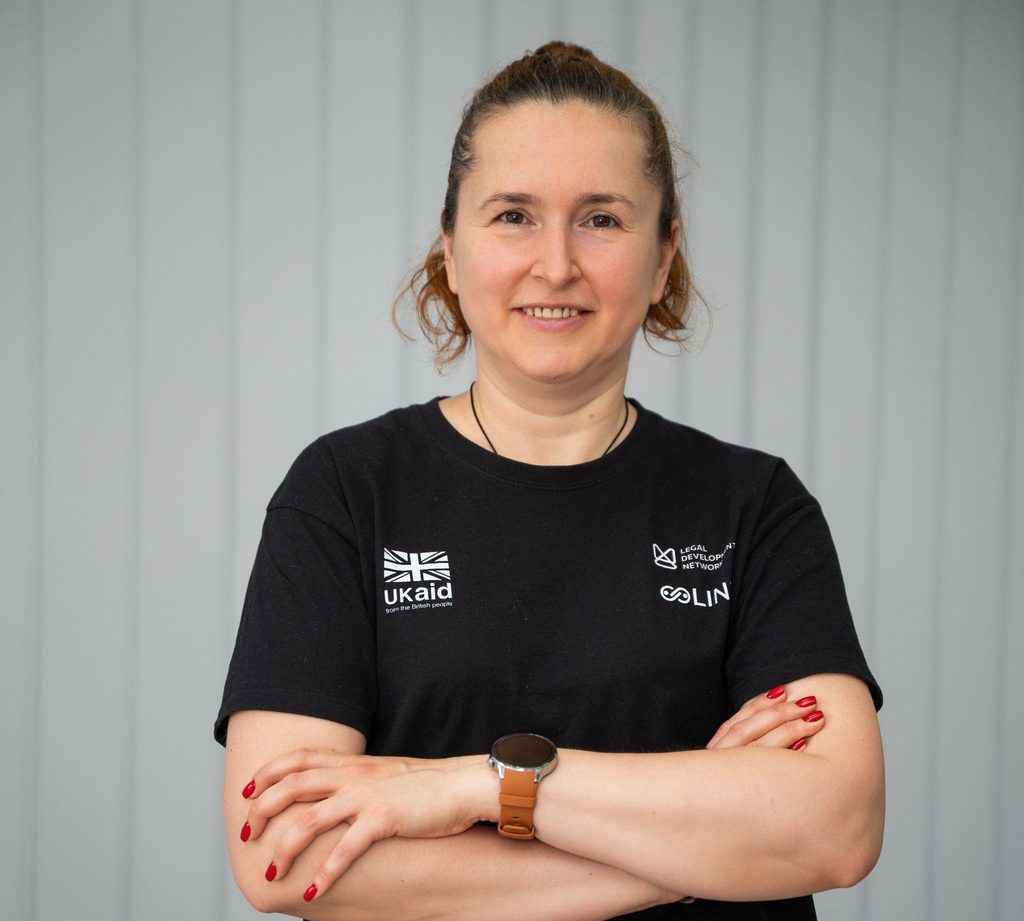
“There are communities on the coastline that are impossible to reach at all, and Nova Poshta doesn’t operate there. We help them through requests to the Clusters (aid reaches these settlements in Humanitarian Convoy vehicles),”
says Needs Collection Manager Yelyzaveta Potapova.
Where needs are greatest
Three communities, Vysokopillia (1,280 needs), Novovorontsovka (1,066) and Velyka Oleksandrivka (617), account for 44% of all needs in the oblast. They also have the most open requests: 353 in Novovorontsovka, 286 in Vysokopillia and 218 in Velyka Oleksandrivka.
Needs are met most often in Milove (88%), Borozenske (68%), Novooleksandrivka (67%) and Vysokopillia (66%) communities, and least often in Bilozerka and Chornobaivka (16% each), Kochubeivka (23%) and Muzykivka (25%). In these four communities, between 44% and 69% of needs became no longer relevant without a single delivery.
Communities registered the most needs in Q3 2024: 1,403 in three months, of which only 66 were fulfilled at the time. Since 2025, the gap between new and fulfilled needs has narrowed markedly, and in Q3 2026 fulfilled needs outnumbered new ones for the first time.
[Chart 1 (EN): Since 2025, fulfilment has caught up with registration — insert chart1_needs_by_quarter_EN.png]
From heating to health care
Over three years, the needs reported by communities in Kherson Oblast have changed fundamentally. In autumn 2023, they were mostly about heating, housing and non-food items. Since 2025, most requests have concerned health care.
[Chart 2 (EN): Health care has overtaken heating — insert chart2_clusters_by_year_EN.png]
Requests for housing and non-food items have not disappeared, but they have changed. In 2024, communities mostly reported needs for garden tools, electrical goods, stationery and cash assistance. In 2026, they asked for school furniture, stationery, laptops and furniture, as well as bed linen and clothing for families.
There are several reasons why health requests have grown. First, communities really do need more mobility aids (238 needs over the whole period), medical equipment (140) and equipment for rural health posts (FAPs) and outpatient clinics. Second, intensified shelling has forced pharmacies and mobile pharmacy points in the communities to close, so residents have nowhere to buy medicines. The medicines sub-clusters alone account for 836 such items, and 96% of them have been fulfilled.
The share of water, sanitation and hygiene requests barely changes from year to year, ranging from 15% to 22%. The most common are hygiene kits (459 needs over the whole period), water-supply equipment (187), and nappies for children (187) and adults (166). But more and more communities are setting broader goals: not supplying people with kits, but restoring water supply by drilling boreholes, installing water towers and replacing networks. These are the requests that wait longest for an implementing partner.
Heating: a need that fades away rather than being met
Of the 487 needs for heating, gas and electricity, 130 (27%) have been fulfilled, and 233 (48%) are no longer relevant. Fuel is the weakest point. Not one of 69 requests for firewood has been fulfilled, nor any of 55 requests for petrol and diesel; of 39 requests for fuel briquettes, six have been. Potbelly stoves, on the other hand, partners do supply: 31 of 49 requests have been fulfilled.
It should be noted that fuel provision (firewood, fuel briquettes) is handled systematically by the Shelter and NFI Cluster¹ and the Oblast Military Administration (OMA). So when such requests do appear in LINK, they are very rare and mostly come from schools, medical facilities and the administrative centres of starosta districts, since it is precisely their needs that fall outside the attention of the Cluster and the OMA.
The heating requests that reach LINK are rather unusual and hard for organisations to fulfil: of 82 registered in 2026, only 21 have been fulfilled. Among the cluster’s 124 open needs, the most common are generators (28) and portable power stations (22).
Not all needs are equally likely to find a partner
Once a partner takes on a need, it almost always delivers. Of 3,656 bookings, 3,652 were completed in the promised volume, and 99% of deliveries took place no later than the date agreed with the partner.
The problem lies elsewhere: some needs never find anyone willing to take them on.
Health needs are fulfilled most often, at 87%, and half of them within six days. Food requests (70%) and services (62%) also do well. By contrast, housing and non-food items, the largest cluster in the oblast (2,489 needs), is only 27% fulfilled, and almost half of these needs remain open. Water, sanitation and hygiene needs are 47% fulfilled, and animal care needs just 8%.
Water, sanitation and hygiene needs wait the longest (half took at least 46 days to fulfil), along with heating needs (69 days). Besides kits and nappies, these clusters include requests for equipment and fuel, which are harder to procure and deliver.
At the same time, we see another trend: even when humanitarian organisations already have aid in stock, that does not guarantee it will reach people. The security departments of some organisations do not allow trips to de-occupied communities because of constant shelling. Even in organisations with their own vehicles, drivers increasingly refuse to go there. Post is not always an option either: some donors do not accept this delivery method, and large consignments are too expensive to send. And every day, more settlements in the de-occupied communities of Kherson Oblast become unreachable.
What is no longer relevant
Of the 1,533 needs that are no longer relevant, communities registered 1,203 back in 2023–2024. The most common are hygiene kits (138), water-supply equipment (76), cash assistance (57), firewood (54), drinking water (48), adult nappies (47) and garden tools (44).
We see three reasons:
- firewood, briquettes and generator fuel are needed in winter, and once winter is over the request loses its point;
- no partner with a sufficient budget can be found for water supply and infrastructure repairs;
- the mass household requests of 2024 came in at a time when partners were taking on far fewer needs: 405 bookings in 2024 versus 1,698 in 2025.
The “no longer relevant” status does not mean the problem has been solved. It only records that the community no longer confirms the request. People may have received help from other sources, moved away or stopped waiting.
Some of these statuses were assigned in bulk: 400 in Q4 2024 and 573 in Q3 2026. The latter include 227 needs from Kochubeivka community registered back in August–September 2024: garden tools, kitchenware, paint, electrical goods, school furniture. This is why Kochubeivka has such a high share of needs that are no longer relevant.
What is still waiting
Of the 1,615 open needs, communities registered 772 (48%) more than a year ago. The most common unanswered requests are hygiene kits (98), water-supply equipment (91), garden tools (90), electrical goods (54), solar panels (47), furniture (45) and water towers (39). Of the open needs, 892 (55%) are high priority.
Who sees a need and who meets it
The first to see and assess a need are the community informants themselves: starostas, social service workers, and heads of schools, outpatient clinics and cultural institutions, 996 people in total. They report needs, and data verification also goes through them. LINK specialists check the data and look for implementing partners, while civil society, charitable and international organisations deliver the aid, with LINK accompaniment at every stage of meeting the need.
Cross-sectoral cooperation in LINK means resolving one person’s complex situation jointly, through humanitarian, legal and social assistance, so that the person does not have to turn to three different places.
The largest example of this work is the partnership with Humanity & Inclusion. LINK has referred 294 requests from nine communities in Kherson Oblast to the organisation. In these requests, people need rehabilitation, psychological, legal and cash assistance, and assistive devices all at once. So far, 222 requests have been processed. In the booking register, Humanity & Inclusion is the largest international implementing partner in Kherson Oblast, with 114 bookings in 2025–2026.
Who carries out the bookings
Since February 2024, 44 organisations have met needs in Kherson Oblast, but their contributions vary widely. Twenty-five national charitable foundations completed 2,626 bookings (72%), mostly in health. Eight regional CSOs from the South completed 672 (18%), split almost evenly between health and housing and non-food items. Ten international organisations completed 345 (9%).
One foundation, Committee for Medical Aid in Zakarpattia CF, completed 1,603 bookings, or 44% of the total, 1,496 of them in health. The foundation has worked in Kherson Oblast since 2024; its share rose from 35% to 46% in 2025 and stood at 44% in 2026. In Darivka and Kochubeivka communities it accounts for 87% of bookings, and in Milove for 59%.
[Chart 3 (EN): Regional CSOs’ share of bookings fell from 28% to 10% — insert chart3_bookings_by_partner_type_EN.png]
Regional CSOs from the South are completing fewer and fewer bookings. This is mainly down to two organisations: Southern Development Strategy NGO completed 235 bookings in 2025 and only 22 in 2026, and Caritas-Beryslav CF 90 and eight. Meanwhile, Tenth of April NGO completes more every year (50, 68 and 109 bookings), and in 2026 Mangust Kherson Regional CF and Perspektyva joined the work.
The share of international organisations is stable at 8% to 11%, but the organisations themselves have changed. NRC and People in Need, which were active in 2024–2025, carried out almost no bookings in 2026 (NRC none, People in Need seven). Humanity & Inclusion and SOS Children’s Villages, on the other hand, are completing more and more. The share of national foundations, meanwhile, grows every year.
Partner specialisation
The largest number of partners met needs in water, sanitation and hygiene (32 organisations), housing (27) and health (23). Food has 11, heating eight, services six, safety three and animal care two. Of the 44 partners, 18 work in only one cluster and 14 in four or more.
Notably, the LINK platform offers a partial booking feature, so one partner can take on part of a need and another can meet the rest. Yet only 11 times have two organisations joined forces to meet a single need. The largest example is in Velyka Oleksandrivka community: in May 2025, Caritas-Beryslav CF and Southern Development Strategy NGO together provided hygiene kits to four settlements, including 1,341 kits for Velyka Oleksandrivka.
Drinking water for Kariierne was delivered in October 2024 by Caritas-Beryslav and Corridor UA CF, mobility aids for Liubymivka by NRC and Tenth of April, and potbelly stoves for two villages in Kalynivske community by Volunteer Corps and Corridor UA. But water mains, boreholes and water towers, where co-funding would make the most sense, have never been fulfilled by several partners jointly.
Where more partners work, needs are usually met more often. In Chornobaivka, Kochubeivka and Muzykivka communities, where the share of fulfilled needs is lowest, six to eight partners were active; in Novooleksandrivka, Vysokopillia and Novovorontsovka, 17 to 18. But this is not always the case: eight partners worked in Milove community, which has the highest share of fulfilled needs in the oblast, while Bilozerka had 11 partners and one of the lowest shares.
What to do about it
- Start looking for partners for winter needs now. Heating and energy needs are the least likely to be met, and fuel almost never finds an implementing partner. Before the heating season begins, it is worth approaching partners working in the energy sector separately about the open requests, primarily for generators and power stations.
- Seek co-funding for water supply. Boreholes, pumps, water towers and network replacements wait the longest and most often become no longer relevant: the project to replace the water main in Bila Krynytsia lapsed in all 40 of its items. Such requests should be co-funded by several partners or referred to donors that fund recovery. LINK currently has no such mechanism.
- Retain regional organisations. It is worth finding out why regional CSOs from the South are completing fewer bookings, and supporting those that are scaling up their work or joining for the first time.
- Reduce dependence on a single foundation. The greatest risk is for Darivka and Kochubeivka communities, where almost all bookings are carried out by one partner.
¹ In the OCHA coordination system, winter assistance (fuel, heaters, home insulation) falls mainly under the Shelter and Non-Food Items (Shelter/NFI) Cluster. It is not the same as LINK’s Housing and Non-Food Items cluster.
This material was prepared by the Legal Development Network in cooperation with the Czech humanitarian organisation People in Need, with financial support from the UK Government, as part of the HAVEN project (Humanitarian Action through Volunteers, Enablers, and Networks).
The interpretation of LINK data is that of the authors and does not necessarily reflect the views of the project’s partners or donor.

