Author: Valentyna Chabanova-Babak, Content Manager, Link platform
Since August 2025, the Legal Development Network has been coordinating the WASH (Water, Sanitation and Hygiene) Cluster in Mykolaiv Oblast. During this time, several initiatives have been implemented to improve the effectiveness of humanitarian assistance to de-occupied communities. One of them is the intersectoral technical working group “WASH in Schools”. Its purpose was to verify the condition of sanitation infrastructure and water supply in educational institutions across Mykolaiv Oblast in order to identify schools where repairs are urgently needed.
The work was carried out jointly by two clusters: the Education Cluster and the WASH Cluster. The initiative stemmed from a donor request to verify the condition of school sanitation facilities and assess the need for modular reverse-osmosis systems to support prioritization of assistance.
Specialists from the Link platform, which the Legal Development Network has been implementing for the third consecutive year in partnership with the Czech humanitarian organization People in Need with funding from the UK Government, conducted a detailed data verification. Using a wide network of community-based informants, through whom humanitarian needs have been collected and verified for over two years, they identified that a number of educational institutions were no longer functioning. After communication with local authorities, school principals, and field visits, the team compiled a priority list of schools with critical needs. In addition, schools were prioritized by condition, access to water, safety levels, and geographic factors, making it possible to clearly determine the sequence of support.
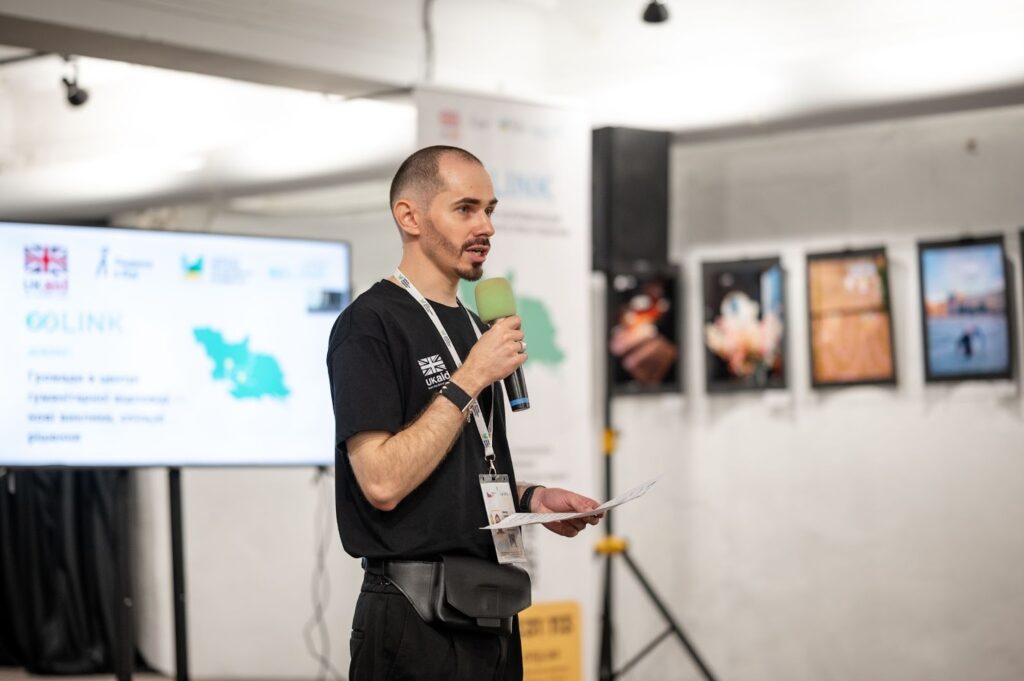
Victor Alkhimov, Program Manager at the Legal Development Network
“We received two lists totaling more than 500 educational institutions. The first reflected needs for repairing sanitation facilities; the second, the need for modular reverse-osmosis systems. We identified target communities, verified the data, and then prioritized the institutions using a methodology we developed. As of now, we have 25 schools that urgently require repairs of sanitation facilities, and 66 schools that require the installation of reverse-osmosis systems as soon as possible.”
Need for Repairs: Sanitary Facilities
Verification and prioritization of the condition of school sanitation units were conducted in seven de-occupied communities of Mykolaiv Oblast: Horokhivska, Bashtanska, Halytsynivska, Pervomaiska, Snihurivska, Shyrokivska, and Myshkovo-Pohorilivska.
Verification and prioritization of sanitation units requiring repair
| Number of educational institutions | Number of sanitation units in these educational institutions that require repair | |
| In the previous request | 205 | 797 |
| Verified | 25 | 62 |
| Of them, prioritized | 25 | 52 |
The initial list received by the Link team contained 797 sanitation units in 205 schools that required repair. Schools located in the target communities were selected for verification. Feedback was obtained from 25 educational institutions, confirming the need to repair 62 sanitation units.
| Number of children currently studying in prioritized educational institutions | Maximum number of students that the prioritized educational institutions can accommodate |
| 2 040 | 6 586 |
As a result of prioritization, 52 sanitation units in 25 schools were identified as needing urgent repair.
Need for Repairs: Reverse-Osmosis Systems
A separate verification addressed the need for reverse-osmosis systems. The target included nine de-occupied communities: Horokhivska, Bashtanska, Halytsynivska, Pervomaiska, Snihurivska, Shyrokivska, Shevchenkivska, Bereznehuvatska, and Inhulska.
Most schools rely on centralized water supply or wells, while some lack access to water altogether. Even where water is available, it often does not meet sanitary standards for drinking. Existing equipment intended to provide schools with drinking water has become nonfunctional—either outdated or damaged due to hostilities and shelling.
Need for reverse-osmosis systems
| Indicator | Number of educational institutions that require repair of reverse-osmosis systems |
| Total in the initial requestі | 313 |
| Of them, verified | 71 |
| Of them, prioritized | 66 |
In the initial list received by the Link specialists, there were 313 schools in Mykolaiv Oblast that required repair or installation of reverse-osmosis systems. As a result of verification and subsequent prioritization, 66 educational institutions were identified as those in urgent need of installing reverse-osmosis systems.
Capacity of reverse-osmosis systems required by the educational institutions
| 500-liter reverse-osmosis system | 1000-liter reverse-osmosis system | Total number of verified educational institutions with identified needs |
| 21 | 45 | 66 |
Most schools require 1000-liter systems — 45 institutions in total — while 21 institutions need 500-liter systems.
| Number of children currently studying in prioritized educational institutions | Maximum number of students that the prioritized educational institutions can accommodate |
| 2 697 | 10 977 |
A total of 2,697 children are currently studying in the 66 prioritized educational institutions, while the overall capacity of these schools is 10,977 students.
The implementation of “WASH in Schools” has demonstrated the effectiveness and value of collaboration between local organizations working in humanitarian response, cluster representatives, communities, educational institutions, and international partners. The Link platform succeeded in systematizing a complex landscape of needs that had long remained fragmented and incomplete. The verification and prioritization of schools will help the donor make objective and well-substantiated decisions regarding support.
This material was prepared by the Legal Development Network in cooperation with the Czech humanitarian organization People in Need and with financial support from the UK Government.

