The situation in Kherson Oblast is becoming increasingly difficult. This is felt most acutely in the city of Kherson and in settlements located close to the line of contact. Specialists of the Link platform, implemented by the Legal Development Network in cooperation with the Czech humanitarian organization People in Need and funded by the UK Government, have updated their security protocols and continue to work even under these challenging conditions. We explain how the rise in attacks is affecting people’s lives and the humanitarian response.
How the security situation in Kherson Oblast has changed over the past four months
According to ACAPS’ quarterly humanitarian access overview, between May and August 2025 the number of shelling incidents, airstrikes, and drone attacks in the right-bank part of Kherson Oblast increased by 20%. This upward trend in attacks is also confirmed by members of the Link humanitarian response team and lawyers who travel to communities to assess needs.
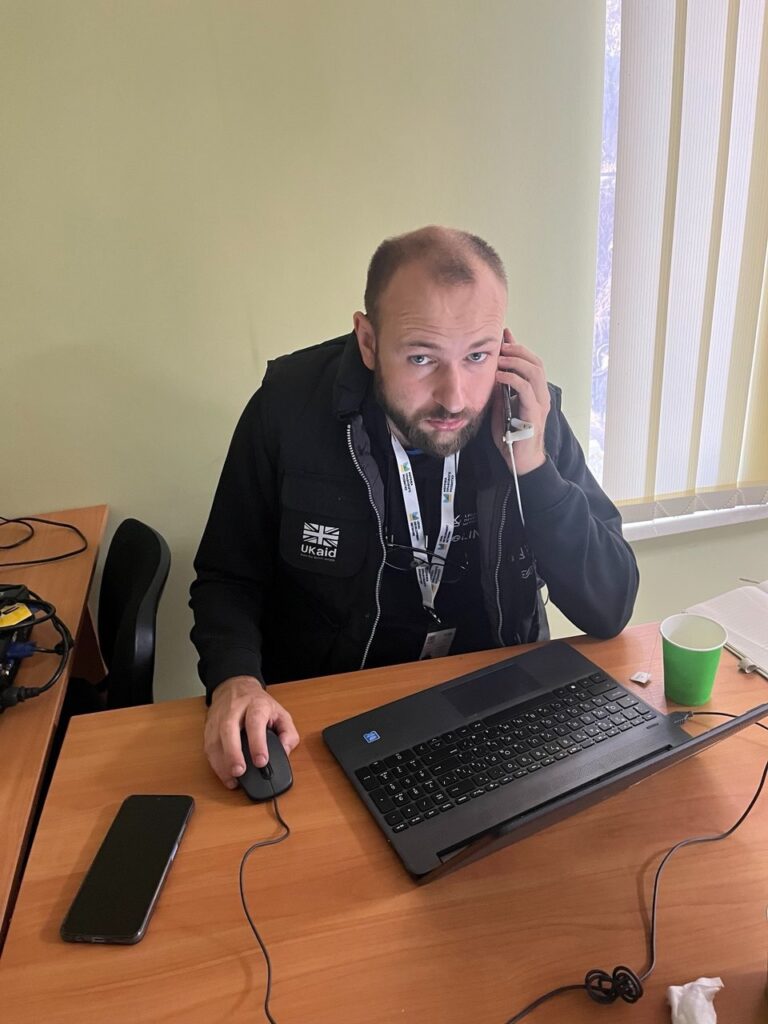
Coordinator of the humanitarian response team in Kherson Oblast — Oleksandr Honchar
“Kherson and coastal settlements are under drone control. Precision strikes are carried out against logistics hubs and fuel stations, and there are also many random impacts. In addition, drones can attack the M-14 highway,”
says Oleksandr Honchar, Coordinator of the humanitarian response team in Kherson Oblast (Kherson city).
The M-14 highway, which connects Kherson and Mykolaiv, is the city’s main logistical artery. Humanitarian aid is delivered via this route, among other supplies. In August, attacks on vehicles increased significantly, and the situation remained difficult until the Regional Military Administration installed protective structures— nets over the highway —to hinder drone operations.
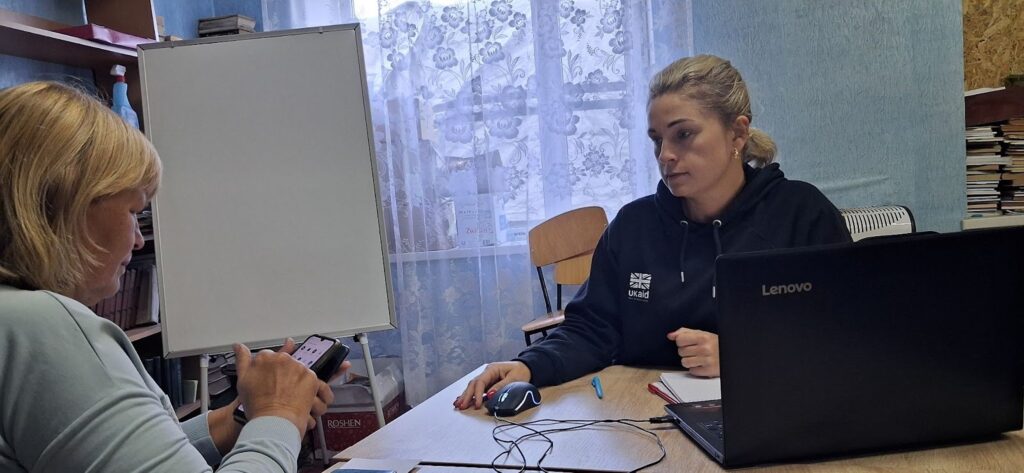
Humanitarian Response Lawyer at Link — Natalia Yurchenko. September 2025.
“During the escalation, before these nets were installed, many vehicles were damaged, people were injured, and there were fatalities. This affected both military personnel and civilians,”
says Natalia Yurchenko, Humanitarian Response Lawyer at Link.
At the peak of the escalation, the number of field visits to collect humanitarian and legal needs decreased because it was difficult to plan safe movement. The situation has now somewhat stabilized; however, drones are still actively targeting a section of the road that is not yet covered by protective nets—the entrance to Kherson from Chornobaivka. In August–September, humanitarian organizations faced significant challenges delivering aid:
“Many drivers from other cities refused to go. We involved local humanitarian organizations that intercepted the aid in Posad-Pokrovske and transported it into the city,”
says Oleksandr Honchar.
Oleksandr also notes an increase in shelling of hospitals, which puts additional pressure on the humanitarian situation. Moreover, there is a shortage of doctors, as not all are willing to work under conditions of intense shelling.
Due to the extremely difficult situation in Kherson, people from surrounding communities are trying to travel to Mykolaiv to access various social services. However, this is not always possible because of bureaucratic barriers.
“An elderly woman from the village of Soniachne contacted me—she cannot obtain IDP status. She does not have the Diia application, the mobile Administrative Service Center does not visit her settlement, so she needs to travel to Kherson because Soniachne belongs to the Kherson community. We are currently looking for ways to help her,”
Oleksandr shares.
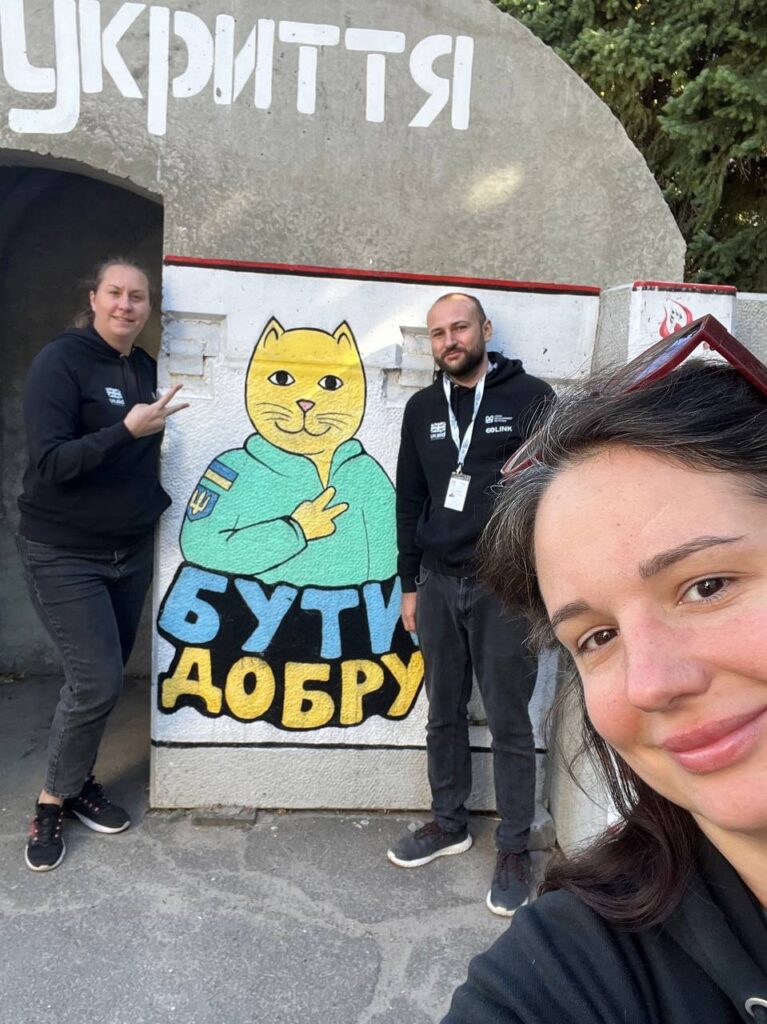
Left to right:Data Collection Specialist in Kherson Oblast Anna Lytvyniuk, Coordinator of the humanitarian response team in Kherson Oblast Oleksandr Honchar, Data Collection Specialist in Kherson Oblast Kateryna Maiboroda(Kherson city). September 2025.
The security situation has significantly deteriorated in the Bilozerka community and Dariivka community. In the Novooleksandrivka community and Novoraisk community, only one settlement remains that is considered relatively safe, where humanitarian aid can still be delivered.
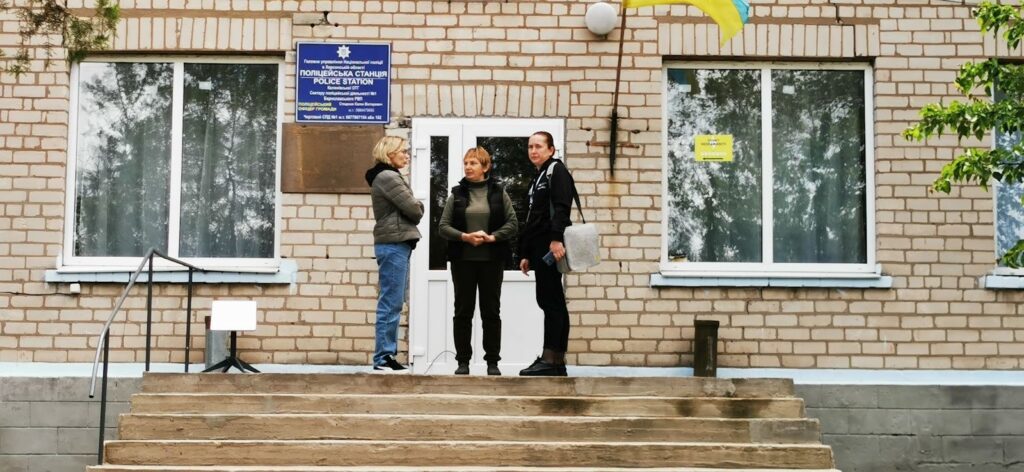
On the left in the photo — Coordinator of the humanitarian response team in Kherson Oblast, Yuliia Stadnyk. May 2025.
“FPV drones and artillery are shelling villages that were considered relatively safe in June,”
explains Yuliia Stadnyk, Coordinator of the humanitarian response team in Kherson Oblast (Zelenodolsk, Dnipropetrovsk Oblast).
How the escalation affects the work of humanitarian organizations
Changes in the security situation have a significant impact on the work of humanitarian organizations in the region. On the one hand, some organizations that previously worked only in Mykolaiv Oblast have expanded their activities to Kherson Oblast because the situation has worsened and people need support. On the other hand, all humanitarian organizations operate under certain restrictions and security protocols, making it difficult to plan the delivery of humanitarian aid to communities under constant shelling.
“We identify relatively safe settlements, arrange deliveries there, and then, together with the communities, think through how to get the aid to villages where no one is willing or able to travel,”
Yuliia Stadnyk says.
Another aspect of how the security situation affects humanitarian assistance is staff exhaustion among organizations working directly in Kherson Oblast. High staff turnover is being observed.
“In many organizations, field staff have changed. We understand that this is due to intense psychological and emotional pressure. However, management—sometimes based in another country—does not always understand what is happening in Ukraine or take the local context into account. Miscommunication leads to emotional burnout and people leaving their jobs,”
Yuliia Stadnyk explains.
Taking the local context into account is crucial for effective assistance. Internal rules of most humanitarian organizations require strict documentation of aid delivery: photos, lists of recipients, and similar records. However, the specifics of delivering aid to areas under constant shelling make such detailed reporting impossible.
“In such settlements, aid delivery looks like this: a vehicle drives through, and packages or water bottles are thrown directly into courtyards while the vehicle is still moving. There is no possibility to stop, unload properly, or gather people—it is simply too dangerous,”
Yuliia Stadnyk continues.
At times, Link specialists ask donors to package aid in smaller units so it can be unloaded more quickly near households as vehicles pass by. This is less cost-effective but safer for those working on the ground.
Security protocols and practices during humanitarian missions
Due to the deterioration of the security situation—particularly shelling along the M-14 highway—the local Link team temporarily suspended field visits to collect humanitarian and legal needs. Operations have now resumed, and additional steps have been taken to strengthen team safety.
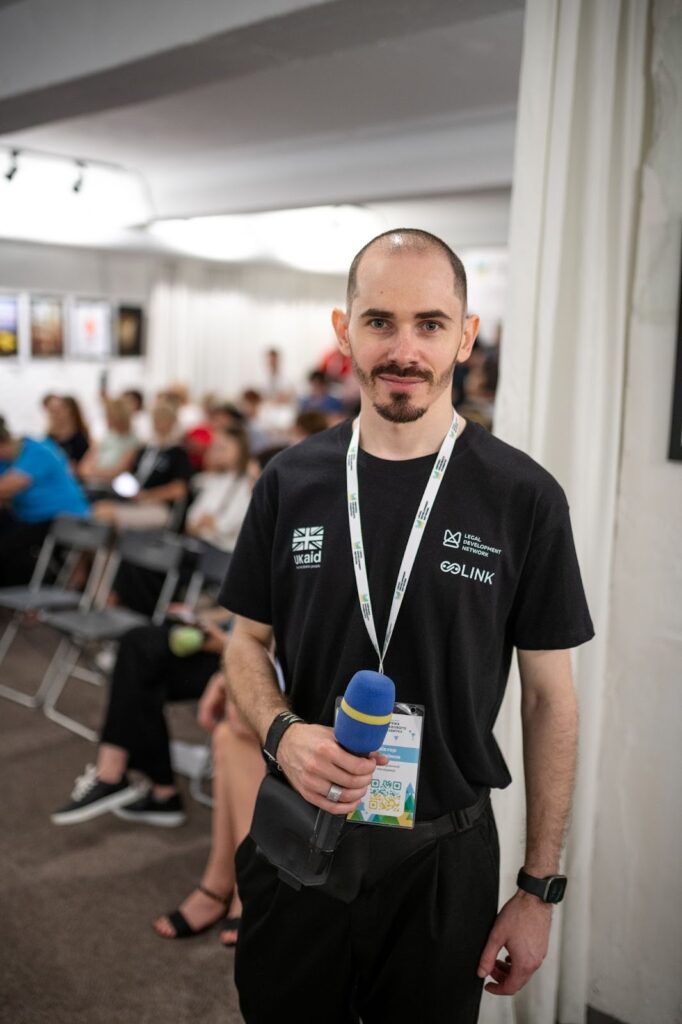
Viktor Alkhimov, Program Manager of the Legal Development Network
Viktor Alkhimov, Program Manager of the Legal Development Network, says:
“We have updated our internal trip coordination protocols in line with standards used by international organizations, introduced a backup-team system, and provided everyone working in communities with personal protective equipment. We are currently conducting first aid training.”
The civil society organization Strong Because Free carries out evacuations, responds to the aftermath of strikes, operates as a social taxi in Kherson, and addresses needs through Link. The organization’s head, Ihor Chornyi, notes that awareness of security protocols is the first and most essential thing humanitarian workers operating in Kherson Oblast need to know.
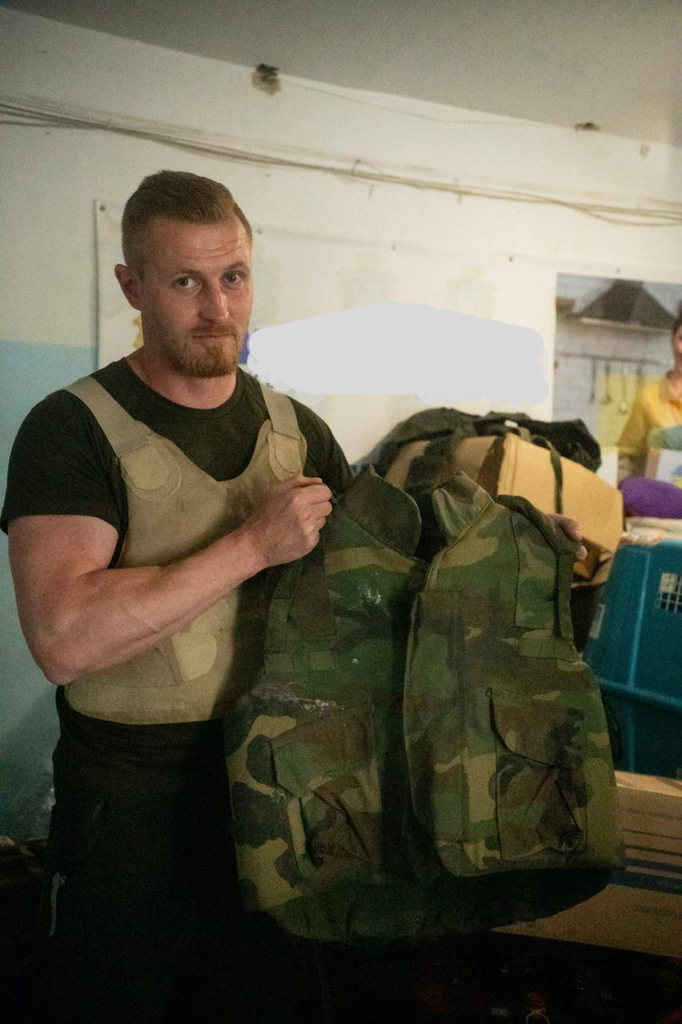
Ihor Chornyi, Head of the civil society organization Strong Because Free
Ihor Chornyi, Head of the civil society organization Strong Because Free, says:
“Personal safety comes first. If something happens to us, we will no longer be able to help anyone. We had a situation where shelling began, but our team managed to leave the area that was under fire in time. Other people who arrived to help those affected by the shelling did not make it. One person was killed and another was injured due to a repeated direct strike. It is essential to prioritize one’s own safety.”
The material was prepared by the Legal Development Network in cooperation with the Czech humanitarian organization People in Need, with financial support from the UK Government.

